

Sarde alla Beccafico
Sicilian stuffed sardines with sultanas, pine nuts, citrus zest, breadcrumbs and parsley


Ciao!
I’m writing this from my couch on a Sunday night in Australia, willing myself to sit down and actually write.
Yesterday I hosted my second supper club. The theme was Aperitivo Mediterraneo: a long afternoon, small plates, warm light, ocean in the background, Campari in hand. My vision: golden hour on the beach, dishes passed around in the sun.
What happened instead: a marathon shutting down most of the main roads, and gale-force winds that made being outside completely impossible!!
We ended up at my dad’s house. It was beautiful, intimate, and one of those moments where nothing goes to plan but makes you think, perhaps this is exactly as it was meant to be... It brought me back to the essence of why I’m doing this in the first place. The vision matters, yes, but the whole purpose of a supper club is good food and people chatting, laughing, and leaving feeling warm. Did all of that happen? Yes!
So where does the Sarde alla beccafico come in? It was one of the small dishes we served, and they are delicious. Sardines stuffed with sultanas, pine nuts, citrus, anchovies, breadcrumbs and parsley, a dish hailing from beautiful and chaotic Sicily, and one of my absolute favourites.
Sicilian food has such a different vibe to the rest of Italy, and it comes down to history. Sicily has been invaded by so many cultures over the centuries, the Arabs among the most influential, and you can taste that influence woven through the cooking: spices, sweet and savoury combinations, ingredients you simply won’t find on the mainland. Something entirely new emerged from all of that, and it’s probably why Sicily has some of the best food in Italy.
Like so many beloved Italian dishes, Sarde alla beccafico has humble origins inspired by food only the wealthy could afford. Sicilian nobles used to hunt a tiny songbird called the beccafico (literally: “fig-pecker”). These birds spent their summers gorging on ripe figs, which made their meat plump and extraordinarily prized. The aristocrats would roast them whole, stuffed with their own entrails, a delicacy completely out of reach for ordinary people.
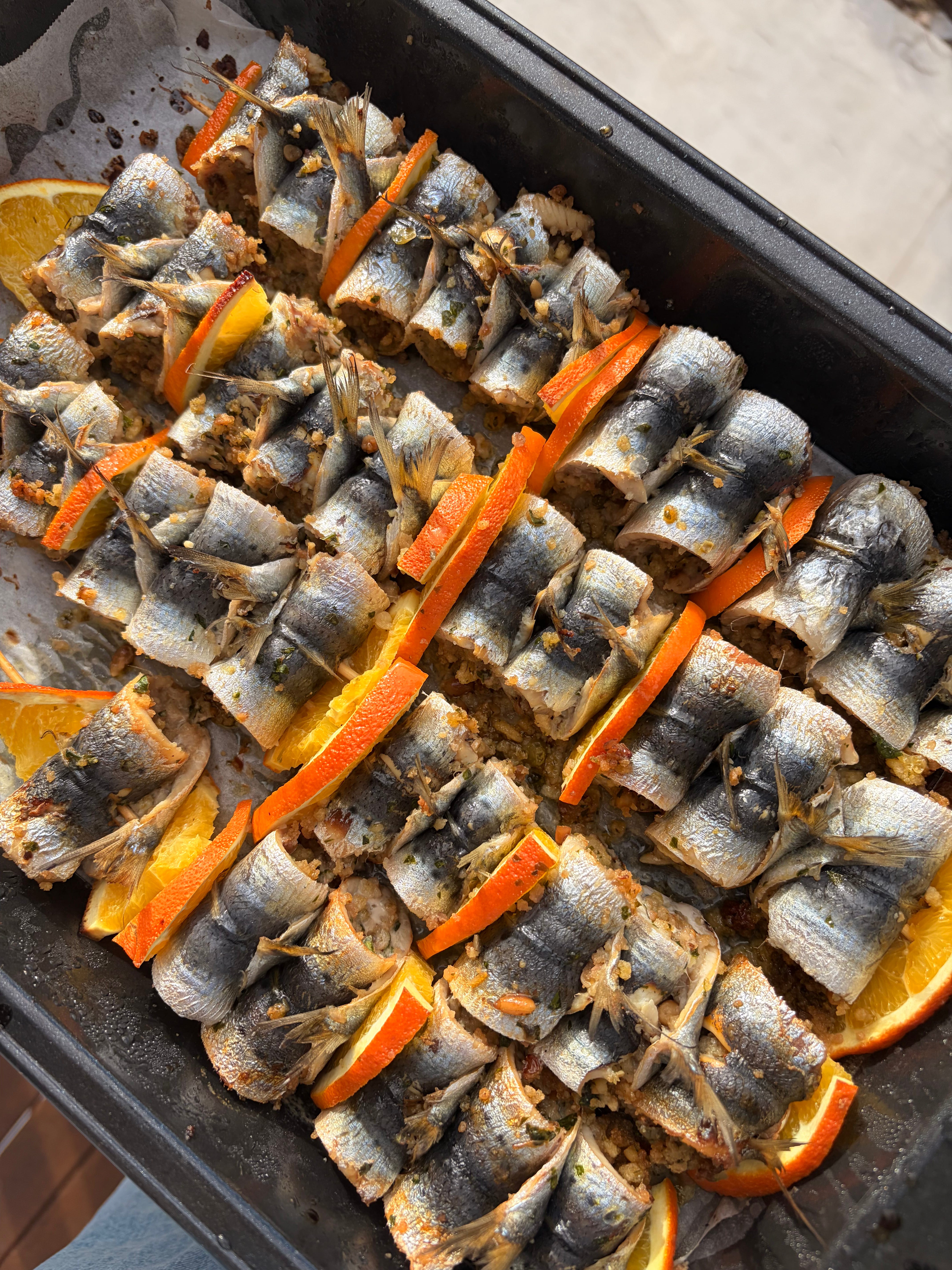
So the fishermen and peasants did what people have always done: they got creative. They replaced the bird with the most affordable, abundant thing around, sardines, and recreated the dish from what they had. Breadcrumbs instead of rich meat, raisins, pine nuts, anchovies and herbs to echo that same sweet-savoury stuffing. They rolled the sardines to mimic the plump silhouette of the roasted birds, and curled the tails upward as a small, playful nod to the original. A poor dish made in imitation of a luxury, and somehow more interesting for it.
What I love is that the poor version has outlasted the original entirely, and sardines are still one of the cheapest fish you can buy. To make this dish you need to buy them whole and clean them yourself. Gutting fish sounds unpleasant, I know, but I genuinely love doing it. It gives you a real connection to what you’re eating, a reminder that yes, this is a fish. That matters.
In another nod to taking something that already exists and adding your own twist, we served the sardines with a mint and parsley sauce, which added such a beautiful brightness and extra depth of flavour.
I hope you make these and love them!
Enjoy, you hungry thing x
Ingredients
Sardines
800 grams whole fresh sardines, cleaned, butterflied, heads and spines removed
1 cups coarse breadcrumbs
3 tablespoons sultanas or currants
3 tablespoons pine nuts
3-4 anchovy fillets, roughly chopped
3 tablespoons parsley, finely chopped
1 clove of garlic
Zest of 1 orange
Zest of 1 lemon
Olive oil
Salt and pepper
For cooking: wooden skewers, orange slices or bay leaves
Mint sauce
Bunch of mint leaves
Half bunch of parsley leaves
Garlic clove
Zest and juice of 1 lemon
Olive oil
Salt
Optional: little bit of fresh chilli
To create
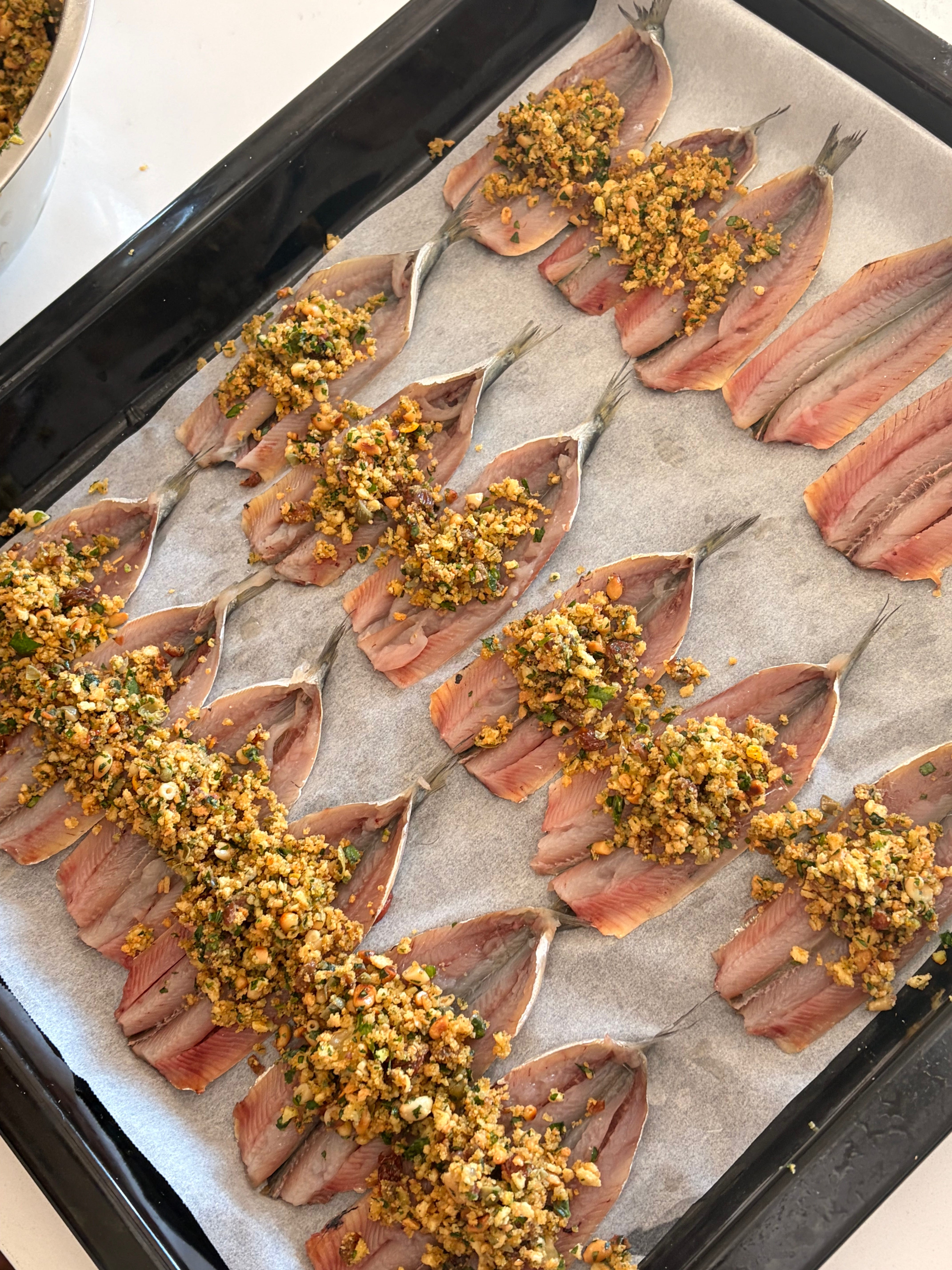
Clean the sardines: Cut the head off each sardine. Using a small sharp knife, run it from the top down the belly all the way to the tail. Gently open the sardine like a book, removing the insides and giving it a rinse under cold water. To remove the spine, gently pull it out with your fingers and snap it off at the tail end. Leave the tail attached. Lay the cleaned, opened sardines flat on a tray.
Soak the sultanas: Place 3 tablespoons sultanas or currants in a bowl and cover with boiling water. Leave for a few minutes to soften, then drain and roughly chop.
Toast the breadcrumbs and pine nuts: In a dry pan over medium heat, toast 1 cups coarse breadcrumbs and 3 tablespoons pine nuts together, stirring often, until golden and fragrant. Transfer to a bowl.
Make the filling: Finely chop the parsley, anchovies, and garlic clove. Add to the bowl with the toasted breadcrumbs and pine nuts, along with the sultanas, orange and lemon zest. Drizzle in some olive oil, mixing as you go, until the mixture resembles wet sand. Season with salt and pepper and add more citrus zest if you’d like it more vibrant.
Stuff and roll: Place a small spoonful of filling in the centre of each sardine and roll it forward toward the tail. Don’t worry if some falls out, just press a little more back in at the sides. Pierce each rolled sardine onto a wooden skewer, layering with orange slices or bay leaves in between. Continue until all sardines are done.
Bake: Arrange the skewers in a baking dish, drizzle with a little more olive oil, and bake at 200°C for up to 15 minutes or until softly golden. You don’t want them to dry out.
Make the mint sauce: While the sardines bake, blend the fresh mint, parsley, garlic clove, lemon zest and juice, olive oil, and salt, until you have a smooth sauce. Add 1 fresh chilli (optional) if using. Loosen with a splash of water if needed, and adjust lemon and salt to taste. Make it as chunky or silky as you like.
Serve: Remove from the sardines from the oven and allow to rest for a few minutes. Sardines are delicious warm but even better at room temperature. Serve with the mint sauce alongside or drizzled over the top.
Buon appetito!
If you’d like to support these recipes, food guides, and writing, consider purchasing a monthly subscription—think of it as treating me to a coffee each month! ☕
Other meaningful ways to support are leaving a comment, liking this post, or sharing it with someone who’d enjoy it. Every small gesture makes a difference and helps me keep writing, creating, and sharing 💌 Thank you.